In San Francisco I walk a lot. Some of the hills are too challenging for my simple road bike, taking the car out just to get to the newspaper shop is stupid, and I have never worked out how the bus system works here. 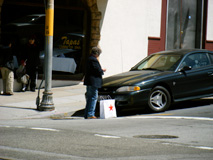
I do, however, see people – usually older women with shopping bags – hanging around near street corners a lot. While enjoying my Swensen’s ice cream the other day, I saw them again: more and more women gathered by a shop on a corner. Then, suddenly, they were gone.
I waited a few more minutes, eating my ice cream, and more people appeared. Then I saw what brought them to that corner: it was actually a bus stop. As I walked over, I noticed that there was a yellow band painted onto a lamp post. It actually had two numbers stencilled onto it, obviously the numbers of the busses that stop there. 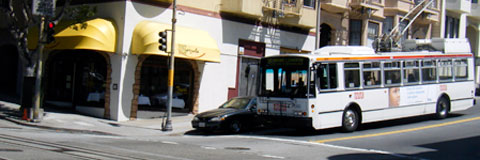
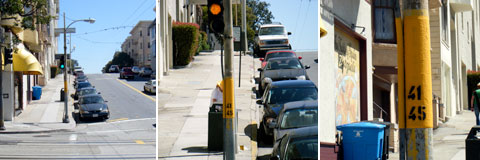
With this attitude towards passenger information I am not surprised that people in the US stick to their cars as much as they do.
The stop on the other side of the street at least had the words BUS STOP painted on the lamp post, but nothing else. No timetables, destinations, routes, fares. A closely guarded secret for the natives. Nobody seems to want more passengers.
here in chicago our buses and trains are well labeled and have time tables. however, the buses and trains don’t run on those timetables. you’ll often wait 15-20 minutes for a bus only to see three buses one right another. still it’s not bad enough to make me get a car.
we have a lot to learn about public transit here.
Timetables for buses are superfluous, as there is no way anybody can plan the flow of traffic to the minute. The best method is to make a bus come every 10 minutes or so, then people don’t mind waiting. And technology makes it easy to announce the next buses: that happens at bus stops in London and in Berlin with digital displays.
Maps and destinations, however, are vital.
The lack of any information and any distinguishable bus-stop sign is a gross error but I do like the fact there is less street furniture overall. Using existing traffic poles as bus stops could work if thought out correctly.
Just paint the poles yellow – interesting concept.
Speaking from experience though, it’s cheaper to put up a sign, and less confusing if the routes change, because you can just move them. Also – Some things, like yellow bands on poles are not immediately significant.
Here in Columbia, South Carolina, we have a pretty lousy bus system–to get from downtown to the chief shopping area involves a transfer on the clear opposite end of town–but even we at least have a standardized sign to indicate where a bus stop is. I would agree that more information would be beneficial; our signs have a stop number and a phone number to call for bus updates (see http://www.gocmrta.com/howtoride.asp). Just like most things in Columbia, it’s mediocre.