decoration
Spiekerblog
 

19. 06. 11

Rip-off explained

MyFonts obvi­ously have no qual­ity con­trol what­so­ever. Or they would have noticed that the type­face they pub­lished under the name Silk­stone was not only a bla­tant imi­ta­tion of my ITC Offic­ina, but that even the data is bad.


The copy­right field in the font infor­ma­tion shows no credit, but the per­pe­tra­tor didn’t even bother to delete the date which shows when the orig­i­nal ver­sion was released, in this case 2003. (There have been var­i­ous updates and new ver­sions of Offic­ina since its orig­i­nal release in 1989)


In order to either hide the source at least a lit­tle bit, a few let­ters were changed, e.g. the dot on the i was made square and the serif removed. But the j is the give-away: surely those changes should have also been applied to it as well? The same applied to the n and m. A lit­tle manip­u­la­tion here, none there.


And, finally, this is how it was done: the com­plete font was extrap­o­lated auto­mat­i­cally, prob­a­bly to make it look dif­fer­ent. The result is a thin­ner and smaller let­ter (the red out­line), with bad data where the auto­matic pro­ce­dure would have required man­ual inter­ven­tion to make it good. Obvi­ously too much trou­ble for some­one who’d rather pre­tend to be orig­i­nal than to actu­ally do orig­i­nal work.


16. 06. 11

Elegant styled new typeface?

A new type­face that is intro­duced with such bad gram­mar (it should be “ele­gantly styled…” and “sophisi­cated” instead of “sophis­ti­cated” is a dead give-away) is off to a bad start. It only takes one look to see that this descrip­tion
… The Silk­stone Sans font was orig­i­nally cre­ated to fill a void in the type­face mar­ket and is aimed at peo­ple look­ing for a clas­sic ele­gant styled mod­ern type­face suit­able for a vast array of projects and designs. Designed and pro­duced by Paul O’Connell of POCT, it is a sans serif type­face cre­ated with many flavours and influ­ences, but still man­ages to retain its orig­i­nal­ity and is a trib­ute to many of today’s mod­ern fonts …
is a load of bol­locks. Silk­stone Sans is an unashamed rip-off of my ITC Offic­ina. Rais­ing the cross­bar on the e a lit­tle and straight­en­ing the top left on the n hardly con­sti­tutes a redesign (the m has been left alone), nei­ther does extrap­o­lat­ing the face to a thin­ner weight. Mak­ing the i-dots square instead of round and tak­ing the serif off the i takes away some of Officina’s strong char­ac­ter with­out adding orig­i­nal­ity, so why bother?

I am sur­prised that no-one at MyFonts saw this. It didn’t take very long after its release that lots of peo­ple saw it, rec­og­nized the deceit and tweeted about it. I am sur­prised that Paul O’Connell has had the nerve to so pub­licly expose his lack of shame. Or has steal­ing some­one else’s work sud­denly become some­thing to brag about?


The orig­i­nal:


The fake:


13. 06. 11

Art Bollocks Generator

I clicked the but­ton on Art Bol­locks Gen­er­a­tor which came up with this:


My work explores the rela­tion­ship between emerg­ing sex­u­al­i­ties and life as per­fo­mance.
With influ­ences as diverse as Wittgen­stein and Frida Kahlo, new syn­er­gies are crafted from both sim­ple and com­plex mean­ings.
Ever since I was a teenager I have been fas­ci­nated by the ephemeral nature of mean­ing. What starts out as tri­umph soon becomes cor­rupted into a hege­mony of temp­ta­tion, leav­ing only a sense of what could have been and the pos­si­bil­ity of a new real­ity.
As spa­tial impres­sions become frozen through bound­aried and per­sonal prac­tice, the viewer is left with an insight into the pos­si­bil­i­ties of our future.


That wasn’t arty enough, so I pressed the gen­er­ate but­ton again and it gave me this:


My work explores the rela­tion­ship between new class iden­ti­ties and mul­ti­me­dia expe­ri­ences.
With influ­ences as diverse as Niet­zsche and Roy Licht­en­stein, new com­bi­na­tions are cre­ated from both sim­ple and com­plex mean­ings.
Ever since I was a child I have been fas­ci­nated by the ephemeral nature of the mind. What starts out as hope soon becomes cor­rupted into a cacoph­ony of temp­ta­tion, leav­ing only a sense of chaos and the inevitabil­ity of a new syn­the­sis.
As tem­po­ral phe­nom­ena become frozen through bound­aried and diverse prac­tice, the viewer is left with a glimpse of the pos­si­bil­i­ties of our future.


Click again, and this was offered:


My work explores the rela­tion­ship between emerg­ing sex­u­al­i­ties and skate­board ethics.
With influ­ences as diverse as Niet­zsche and Fran­cis Bacon, new ten­sions are crafted from both tra­di­tional and mod­ern lay­ers.
Ever since I was a child I have been fas­ci­nated by the the­o­ret­i­cal lim­its of mean­ing. What starts out as hope soon becomes cor­roded into a cacoph­ony of lust, leav­ing only a sense of chaos and the pos­si­bil­ity of a new real­ity.
As shift­ing forms become clar­i­fied through emer­gent and crit­i­cal prac­tice, the viewer is left with an impres­sion of the edges of our future.


12. 06. 11

Year Zero?

I have just returned from the OFFF fes­ti­val in Barcelona. Ear­lier this year, they asked me for a state­ment about the future. They announced this the Year Zero, a restart. Go back to zero, wipe out the past, etc. Not sure I agree with that, but that’ll be the topic for another comment.

Usu­ally, I deny these requests because I don’t like mak­ing pre­dic­tions about sub­jects I don’t know. But they insisted, and in the end I sent them this lit­tle piece:


Rethink Design, Redesign Think­ing.
As a designer, I like the future.

After cen­turies of being dom­i­nated by tech­nol­ogy – from cut­ting wood to print­ing neg­a­tives, from bak­ing mud bricks to rein­forc­ing con­crete – design­ers of all dis­ci­plines now have the tools to present and make any­thing imag­in­able. There is no excuse for not com­ing up with new con­cepts. Design­ers and archi­tects can no longer blame their short­com­ings on the lim­its of tech­nol­ogy. There will always be clients to blame –  that has not changed since the Pope asked Michelan­gelo to paint the ceil­ing of that lit­tle chapel in the Vatican.

The best thing, how­ever, is the fact that we are begin­ning to real­ize some­thing else: we have tal­ents that go beyond mak­ing things work well and look good. We can also take apart ideas, look at them, throw away what is not needed and put them back together again. Design­ers can redesign think­ing. And we need to, because nobody else will.


31. 05. 11

A face in my face

Lasko Dzurovski from Mace­do­nia just sent me this por­trait of myself, all done in char­ac­ters from FF Meta.
I don’t know how Lasko finds the time to do this, but it is pretty amaz­ing. The orig­i­nal is very big and very high-res.


29. 03. 11

Nokia sans character

In the light of the recent replace­ment of the type­face we designed for Nokia in 2001/2002 (with added weights and pro­duc­tion design by Mono­type) here is a PDF I made as a first pre­sen­ta­tion of the com­plete fam­ily. The type­face was still under devel­op­ment then, and my doc­u­ment includes notes point­ing out some of the issues.

The com­par­isons offered by Dal­ton­Maag and Nokia fail to men­tion that there are also wide ver­sions of Nokia Sans which would have been per­fectly suit­able for UI pur­poses and offer at least as much char­ac­ter as the new one. Nokia Serif doesn’t get a men­tion at all and was never used. Goes to show the depth of typo­graphic knowl­edge at Nokia.

After 10 years it was high time to look at Nokia’s type­faces as the dom­i­nant visual voice of the brand but who­ever decided on a com­pletely new direc­tion was either not aware of what was avail­able or was per­suaded by Bruno Maag to start over. Bruno may not cre­ate the most mem­o­rable type­faces, but he cer­tainly knows how to sell them. And tech­ni­cally, their fonts are excel­lent. Too bad they didn’t have the con­fi­dence to work with me on an update. Instead they’re throw­ing out ten years’ of brand recog­ni­tion in favour of bland­ness.


28. 03. 11

Now and then

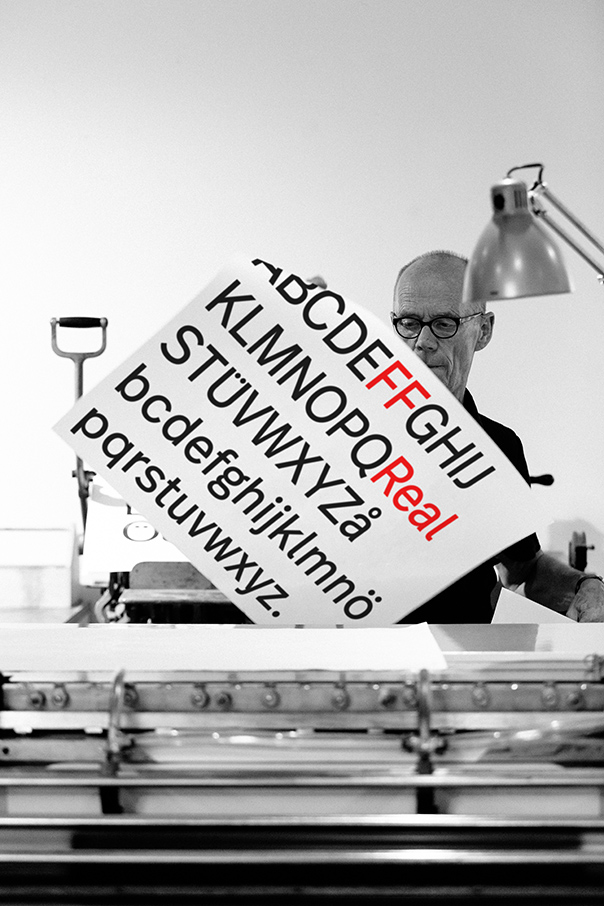
When we were putting up the exhi­bi­tion of my work at the Bauhaus-Archive in Berlin, Thomas Maier took this pho­to­graph of me (ca. 1988) hold­ing up a pho­to­graph of me hold­ing up a proof of ITC Cor­re­spon­dence, the face that was later released as ITC Offic­ina.


26. 02. 11

John Walters lauds Erik Spiekermann

John gave this short speech on the occa­sion of me receiv­ing the Life­time Achieve­ment Award from the Ger­man Design Coun­cil.

John Wal­ters

Andrej Kupetz and Erik Spiek­er­mann

When I went to Berlin a cou­ple of years ago, in prepa­ra­tion for Eye 74, our Berlin spe­cial, I kept run­ning into Erik Spiek­er­mann. Not lit­er­ally, though I did later spend a pleas­ant evening in the com­pany of Erik and his wife Susanna. But I quickly realised that I couldn’t avoid encoun­ter­ing Erik and his legacy. For a start, nearly every per­son I met had some con­nec­tion to him: either they had col­lab­o­rated with him, or worked for him, or they’d been taught or oth­er­wise encour­aged by Erik early in their career. And even peo­ple who didn’t know him very well, or who had never met him, seemed to have an opin­ion about him. They knew him as a designer, as a typog­ra­pher, as a type evan­ge­list and as a writer – chiefly on the sub­ject of typog­ra­phy, but with opin­ions about every other sub­ject: pol­i­tics, soci­ety, cul­ture, art, music and so on. Also, quite apart from all the peo­ple I met, there were traces of Erik every­where I went, on the sub­way, in the signs and the many dif­fer­ent civic and com­mer­cial pub­lic projects that bore the stamp of one of his design prac­tices, or that used one of his typefaces.

So that’s why we called the Eye 74 piece ‘Six degrees of Erik Spiek­er­mann’. We devoted a gate­fold infor­ma­tion graphic to all the con­nec­tions that he had made through­out his career, span­ning the years since 1979, when the com­pany that would become Meta was founded, to the present-day activ­i­ties of Eden­spiek­er­mann. Like Kevin Bacon, Erik seemed to con­nect any­one who was any­one in graphic design, visual com­mu­ni­ca­tion, brand­ing and typog­ra­phy. Yet if our world were Hol­ly­wood, Erik would per­haps be more like Steven Spiel­berg than an actor like Bacon.

Erik is both a gen­er­al­ist and a spe­cial­ist. The first time I ran into him, at an inter­na­tional typog­ra­phy con­fer­ence, he asked me how I could stand to be sur­rounded by so many ‘nerds’? He knows how design­ers and typog­ra­phers think, in the most minute detail, because that’s the way he thinks, too. Yet he’s man­aged to lift his head above the cubi­cle that all too often restricts the graphic design world, and look dis­pas­sion­ately at com­merce and gov­ern­ment and char­i­ties, tak­ing the time to under­stand how they think, too. I have daily rea­son to be grate­ful for Erik’s advice, since his ideas about the Rund­buero, expressed in Unit Edi­tions’ book Stu­dio Cul­ture, helped me make some changes in the way I organ­ise my own office.

William Owen described Erik (in Eye 18) as a ‘con­sum­mate plu­ral­ist’, while also tak­ing on Erik’s own def­i­n­i­tion of him­self as a ‘typo­graphic designer’, who designs ‘from the word up’, a phrase later used for a slim vol­ume on Meta’s work. William also noted that Erik ‘val­ued work of a kind he could never or would never want to do.’ But that is not sur­pris­ing. It is almost the def­i­n­i­tion of a any­one with a rounded inter­est in cul­ture and the world at large: you don’t have to sing opera to value Nixon in China, nor do you have to paint in oils to appre­ci­ate art.

I think it is Erik’s abil­ity to work and show curios­ity at both micro and macro lev­els (and all points between) that makes him a good writer, as well as a good designer. His writ­ing is clear and to the point, whether in a col­umn for Blue­print mag­a­zine or in an email con­tain­ing direc­tions to his house. Even if he had done lit­tle else, the book he wrote with E. M Gin­ger, Stop Steal­ing Sheep and Learn How Type Works, would be an inter­na­tional call­ing card of huge pro­por­tions, since it’s one of the few gen­uinely infor­ma­tive, enter­tain­ing and read­able books about type writ­ten in the past few decades.

When I first watched the DVD of Gary Hustwit’s Hel­vetica, whose extras sec­tion includes an extended inter­view with Erik, I was amused to hear him say how much he liked being an ‘unknown designer’. Today’s cer­e­mony seems an odd place to talk about Erik’s lack of recog­ni­tion. Yet he was mak­ing an impor­tant point about the role of design – graphic design, type design and typog­ra­phy in par­tic­u­lar – in civic life. As Erik explains in that doc­u­men­tary, neatly divert­ing the direc­tor from too many ques­tions about a type­face he doesn’t much care for, a nation’s cul­ture, the stuff that sur­rounds us, is made of good archi­tec­ture and build­ing, good food and cafes and sup­pos­edly nerdy things like the small type in timeta­bles for pub­lic trans­port, or the signs in sta­tions, or the lit­tle details that make your iPhone work intuitively.

Erik gets a kick out of being the unknown author behind some of this stuff, even when the money is ter­ri­ble, and he has to fight ‘the system’ – the con­ven­tional way of doing some­thing – to make things just a lit­tle bit bet­ter. Few peo­ple might notice, or remark out loud that the timetable has acquired more leg­i­ble, read­able type, or bet­ter nav­i­ga­tion, but as Erik would say, ‘That is the point.’ Many design­ers get a kick out of mak­ing things bet­ter, or find­ing a solu­tion, or being part of the team that did that, whether their name is on the fin­ished prod­uct or not. So I think we could regard this prize as one that Erik can share, just a lit­tle bit, with all the unknown design­ers out there, who play their part in mak­ing our lives bet­ter, our small print more legible.

Around the time I became edi­tor of Eye, we pub­lished an updated ver­sion of Ken Garland’s ‘First Things First’,* call­ing on design­ers to exam­ine their pri­or­i­ties. The new man­i­festo included these sen­tences: ‘Unprece­dented envi­ron­men­tal, social and cul­tural crises demand our atten­tion. Many cul­tural inter­ven­tions, social mar­ket­ing cam­paigns, books, mag­a­zines, exhi­bi­tions, edu­ca­tional tools, tele­vi­sion pro­grammes, films, char­i­ta­ble causes and other infor­ma­tion design projects urgently require our exper­tise and help.’ Erik was one of 33 design­ers who put their names to ‘First Things First 2000’, and that state­ment sounds just as rel­e­vant today – throw mobile devices and social media into the mix and it still holds good.

I agreed to come here on the strict under­stand­ing that the Design­preis would not sig­nify or her­ald any slow­ing down on Erik’s part. He still works at a furi­ous pace. He even has a proof­ing press in his house, where he’s cook­ing up plans to com­bine dig­i­tal and ana­logue, mak­ing plates with a laser cut­ter. And in addi­tion to all the usual client work, he is pub­lish­ing a series of book­lets of writ­ings that he likes, and more lit­tle red books of his own work – the thoughts of Chair­man Erik.

These thoughts are worth shar­ing. Erik is con­cerned about nerdy details, yet he loves to con­struct the big pic­ture. He’s a great advo­cate of design’s role in civilised soci­ety, all the bor­ing, behind-the-scenes stuff, but he is also quick to spot what is new and cool, and to cham­pion and men­tor young tal­ent – the new Eden­spiek­er­mann schol­ar­ship is a sig­nif­i­cant addi­tion to this aspect of Erik’s life and work. For all these rea­sons, Erik is a wor­thy recip­i­ent of what­ever awards get thrown his way – and they won’t go to his head.

By John L. Wal­ters, edi­tor, co-publisher, Eye mag­a­zine, 2011

* Pub­lished simul­ta­ne­ously with sev­eral other design mag­a­zines, includ­ing Blue­print, Form and Emi­gre, see http://bit.ly/FTF2000


04. 02. 11

Graphic Design can change your life

Their words, not mine.
Gestalten.tv made this inter­view with me at our house in Berlin.

Graphic design can change your life from Eden­spiek­er­mann on Vimeo.


05. 01. 11

Chocolate packaging on video

We have been design­ing for Tcho since before the com­pany even had a name. Nice to see the brand and the great prod­uct get­ting the recog­ni­tion it deserves:


© Erik Spiekermann | Spiekerblog is proudly powered by WordPress.